CUDX Commits to Building Cooperative Intelligence for the Credit Union Movement
Credit unions can harness the power of shared data exchanges to drive growth, improve decision-making, and ensure future success while maintaining...
2 min read
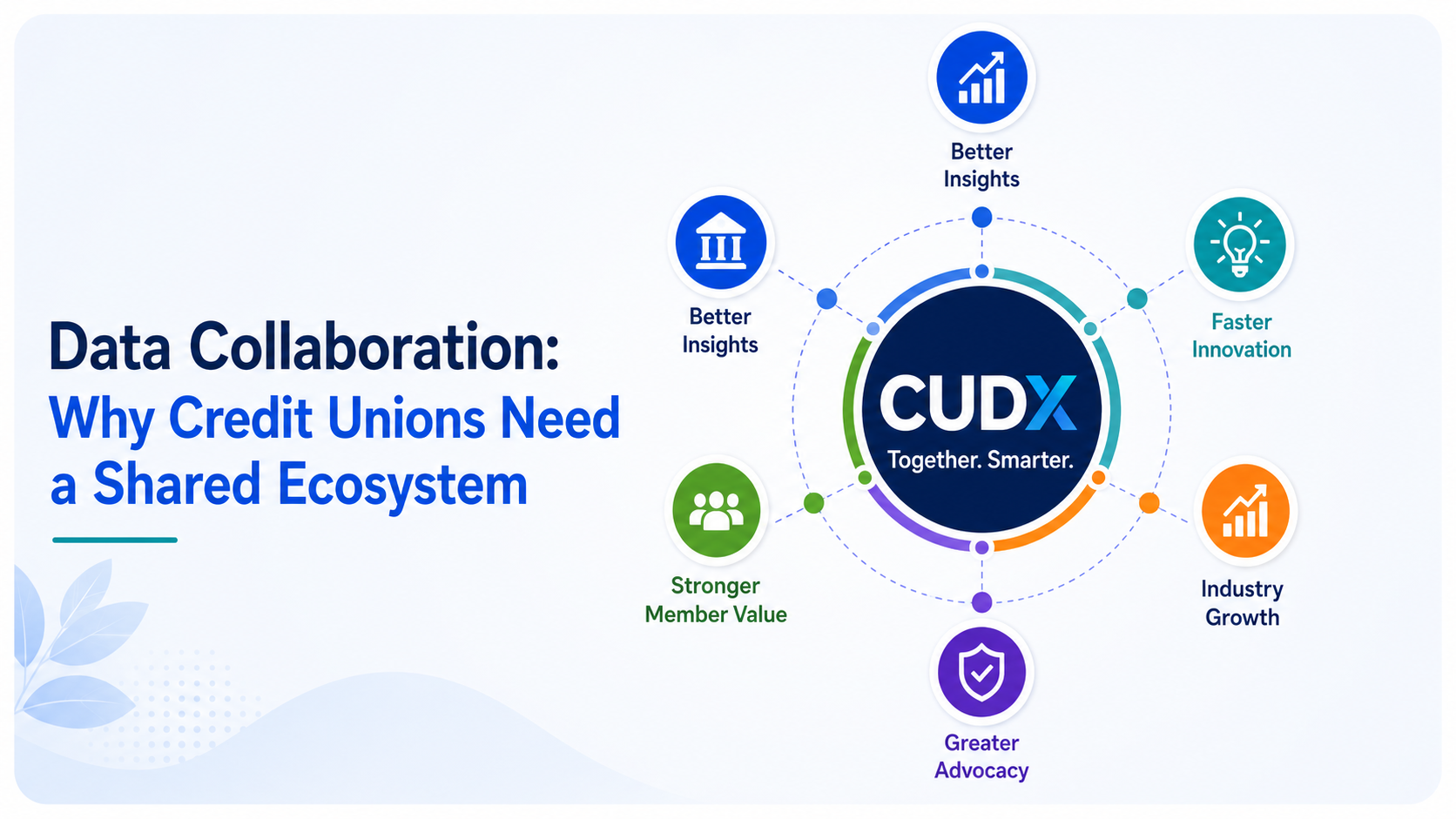
Credit unions have always believed in the power of collaboration. We share ideas, best practices, and resources because together we can accomplish more than we ever could alone.
Today, that same cooperative principle must extend to our most valuable asset: data.
As artificial intelligence, advanced analytics, and digital experiences reshape financial services, no single credit union—regardless of size—can unlock the full value of its data in isolation. The institutions that succeed over the next decade won't simply collect more data - they'll collaborate more effectively.
Every credit union generates an incredible amount of data about its members, products, and communities. Yet much of that data remains locked within individual systems, creating challenges that affect the entire industry.
When data exists in silos, we face common obstacles:
· Limited industry-wide visibility into emerging trends
· Higher technology and analytics costs
· Slower innovation
· Missed opportunities to better serve members
· A weaker collective voice when advocating for the credit union movement
Meanwhile, large financial institutions continue to leverage massive, interconnected datasets to accelerate innovation and improve decision-making.
The cooperative movement deserves the same advantage.
Imagine an ecosystem where credit unions can securely collaborate while maintaining complete ownership and control of their data.
A trusted, governed data exchange enables institutions to contribute standardized, privacy-protected data that creates value for everyone participating—without exposing member personally identifiable information (PII).
The result isn't just more data. It's better intelligence.
A shared ecosystem empowers credit unions to:
Gain deeper industry insights by identifying trends that are impossible to see from a single institution's perspective.
Accelerate AI adoption with access to standardized, high-quality datasets that improve machine learning and analytics.
Deliver better member experiences through richer benchmarking and a deeper understanding of member behavior.
Improve strategic decision-making with industry comparisons and data-driven planning.
Strengthen advocacy by demonstrating the collective economic and community impact of credit unions with credible, aggregated data.
Create new opportunities for responsible data commercialization through aggregated and anonymized datasets while ensuring that credit unions retain ownership of their information.
The benefits extend well beyond individual institutions.
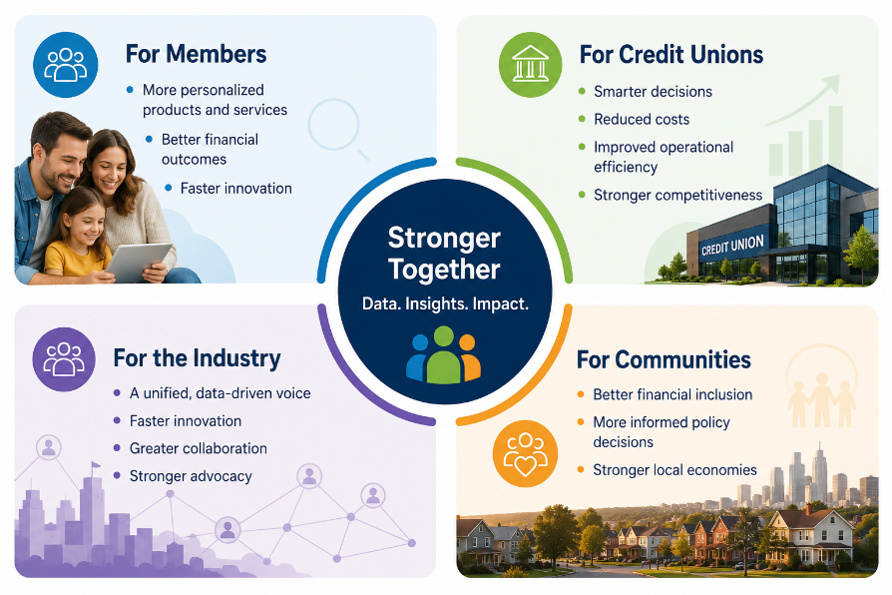
The financial industry is rapidly moving toward connected data ecosystems where collaboration drives innovation.
Credit unions already share a common mission and cooperative values. The next logical step is to build the infrastructure that allows us to collaborate on data with the same trust, security, and purpose that define our movement.
Data collaboration isn't about giving up control.
It's about creating collective intelligence while protecting privacy, governance, and ownership.
The future of the credit union movement won't be built by any one institution.
It will be built by all of us—together.
At CUDX, we believe the future of credit unions is built on secure collaboration, trusted data, and shared innovation.
Because stronger data creates stronger insights. And stronger insights create a stronger credit union movement.
Want to Know more? Contact CUDX.com
Ganesh Morla
Executive Director, CUDX

Credit unions can harness the power of shared data exchanges to drive growth, improve decision-making, and ensure future success while maintaining...

Credit unions can harness the power of shared data exchanges to drive growth, improve decision-making, and ensure future success while maintaining...

Adam Wright, Managing Director, Credit Union Data Exchange Operations at CUDX, talks with CUBroadcast while at Edge Tech Conference 2026, about...